


Knee osteoarthritis is a disease of the musculoskeletal system characterized by deformation and destruction of articular cartilage tissue, resulting in the destruction of cartilage structure and function.This disease has several names - arthroarthritis of the knee, osteoarthritis deformans.There is no clear protocol or single drug for treating knee arthritis that will help everyone with the problem equally.Because arthropathy is a progressive disease, it is more common in overweight women, venous disease, and the elderly.Treatment is administered and tailored to each patient individually.
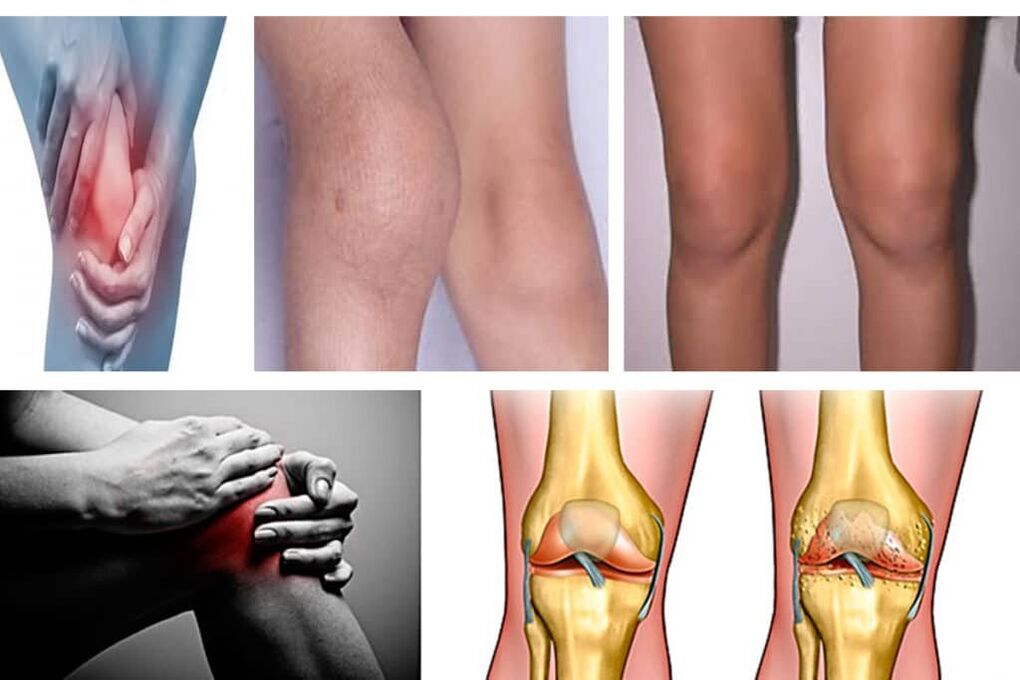
Knee osteoarthritis can be unilateral or bilateral (depending on whether the disease occurs in one or both legs).Appropriate treatment is necessary once symptoms appear, as ignoring the problem may lead to eventual destruction of cartilage and exposure of bone, resulting in human disability.
The disease is divided into three stages:
- The early stages of knee joint disease are characterized by a loss of shock-absorbing properties, causing the cartilage to rub against each other as it moves, causing severe discomfort to the patient.The cartilage becomes rough, deformed, dry, and even cracks in the advanced stages of the disease.
- As depreciation decreases, the bones begin to deform, leading to the formation of osteophytes (bone surface growths) - this is the second stage of the disease.The new membrane and joint capsule of the joint are also deformed, and the knee joint gradually atrophies due to stiffness in movement.There are also changes in the density of the joint fluid (becoming thicker and more viscous), poor circulation, and worsening of the nutrient supply to the knee joint.The cartilage lining between joints thins, reducing the distance between the joint bones.
- The disease progresses rapidly and soon enters the third stage, when the patient is almost unable to move due to persistent pain in the knee.Comprehensive and irreversible changes in cartilage tissue lead to disability in humans.
Most commonly, arthrosis or knee joint disease occurs after an injury or bruise, at the same time a person will feel constant severe pain in the knee, which seriously hinders his movement.
Causes of joint disease
Treatment of arthritis of the knee requires considerable time, and its manifestations may be due to the following factors:
- Genetic predisposition.
- Injuries: Dislocations, bruises, fractures.When treating an injured knee, the joint is immobilized and the patient is unable to bend or straighten the leg for a period of time.This can lead to worsening of blood circulation, most often triggering the development of post-traumatic knee arthritis.
- Remove the meniscus.
- Excessive physical activity inappropriate for a person's age can lead to injuries or minor injuries and hypothermia in the joints.For example, running on asphalt or doing squats is not recommended for older people, since during these exercises a lot of pressure is put on the knee joints, which wear out with age and cannot withstand such loads.
- Overweight and obesity.This factor can lead to meniscus damage, which can lead to knee arthrosis.
- Loose ligaments or weak ligaments.
- Arthritis or other acquired joint disease.The inflammatory process can cause synovial fluid to accumulate or swell within the joint space.This causes the destruction of cartilage tissue in the knee, leading to knee arthritis.
- Human metabolic disorders.Inadequate calcium levels significantly worsen the condition of bone and cartilage tissue in the human body.
- flatfoot.Improper foot structure will cause the center of gravity to shift and increase the load on the joints.
- Stress and nerves.
Symptoms of knee joint disease
The clinical manifestations of the disease include the following symptoms:
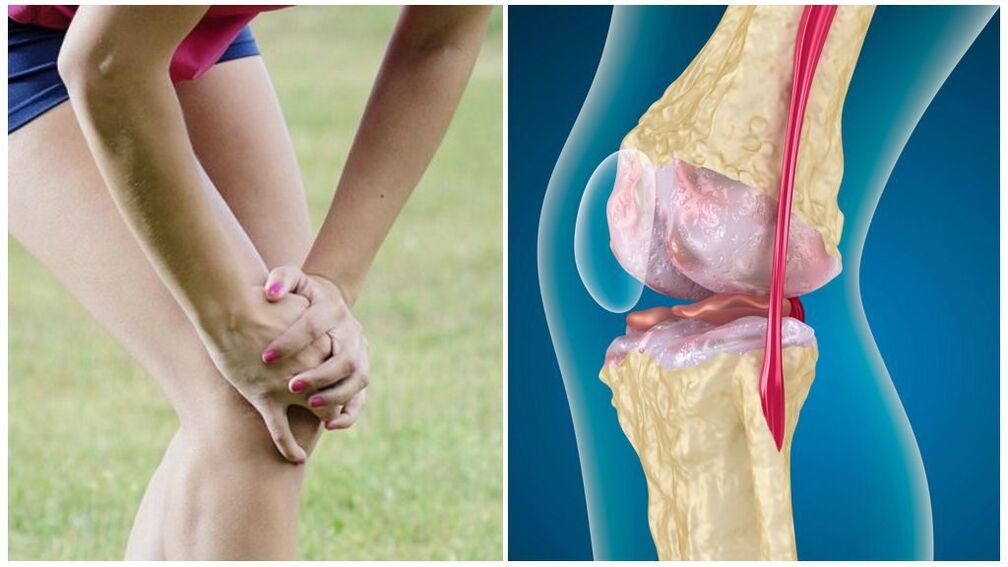
- Painful feeling.The pain occurs suddenly and depends on the physical load on the knee joint.Painful feelings can be of different qualities.In the early stages, these are minor low back pains, and most people don’t pay much attention to them.Periodic mild pain may last for months, sometimes even years, until the disease progresses to a more aggressive stage.
- Deformity of the knee joint may be seen.This symptom appears in the later stages.At first, the knee appears swollen or swollen.
- Synovial fluid accumulates in the joint cavity or in a Baker's cyst.This is a dense structure on the back wall of the knee joint.
- The joints creaked.A sharp crunching sound, accompanied by pain, is observed in patients with the second and third stages of the disease.
- An inflammatory reaction occurs in the joint synovium, causing the cartilage to swell and increase in size.
- Decreased range of motion of joints.Later observations.Bending the knee becomes almost impossible and is accompanied by severe pain.In the final stages, the knee may be completely immobilized.A person's movements become difficult or completely impossible (some patients move with their legs bent).
Treatment of knee arthritis
Treatment of knee arthritis should be comprehensive.To date, there are no drugs that can alleviate the disease.One of the most important conditions for successful treatment is timely diagnosis.The earlier knee treatment begins, the greater the chance of prolonging the remission period and preventing the destruction and deformation of cartilage and bone tissue.
During the treatment process, doctors and patients face the following tasks:
- eliminate or reduce pain;
- Establish nutrient supply to the knee joint to enhance its recovery function;
- Activate blood circulation in the knee joint;
- Strengthen the muscles around joints;
- Increase joint mobility;
- Work to increase the distance between the joint bones.
Treatment of the disease can be conservative or surgical depending on the stage of the disease.
Conservative treatment of knee arthritis
Painkillers, anti-inflammatories
To relieve or reduce pain, patients are often prescribed a course of nonsteroidal anti-inflammatory drugs (NSAIDs).These can be tablets, ointments and injections.The most common pain relievers are as follows.These medications can be used in two ways - orally or topically.
Typically, patients prefer topical treatments in the form of gels, ointments, and warming patches.The effects of these painkillers are not immediately apparent but appear after a few days (approximately 3-4 days).Maximum results are achieved after one week of regular use.Such drugs do not treat the disease itself, but only relieve pain, since it is impossible to start treating the pain.
Painkillers should be taken strictly as prescribed by your doctor; they should only be used for severe pain, as long-term and frequent use can cause side effects and even accelerate the destruction of joint cartilage.In addition, long-term use of these drugs increases the risk of adverse reactions, including gastric ulcers, duodenal ulcers, disruption of normal liver and kidney functions, and allergic manifestations in the form of dermatitis.
hormones
Sometimes, a course of hormonal medications is prescribed when treating arthritis of the knee.If NSAIDs are no longer effective and the disease itself begins to progress, a prescription will be needed.Most commonly, hormonal drugs to treat this condition are given in the form of injections.
Courses of hormonal drugs are usually short and given during severe episodes of inflammation, when inflammatory fluid builds up in the joints.The hormone is injected into the joint about every ten days.
chondroprotectant
In order to restore and nourish the cartilage tissue in the initial stages of the disease, a course of glucosamine and chondroitin sulfate (so-called chondroprotectants) is required.This is by far the most effective method of treating joint disease.They have few contraindications and in rare cases side effects may occur.
vasodilators
Vasodilators are needed to relieve spasm of small blood vessels, improve blood circulation, deliver nutrients to the knee joint, and eliminate vascular pain.They are crushed together with chondroprotectants.Warming ointments, gels and liquids are also recommended if the knee joint is not associated with effusion.
therapeutic exercise
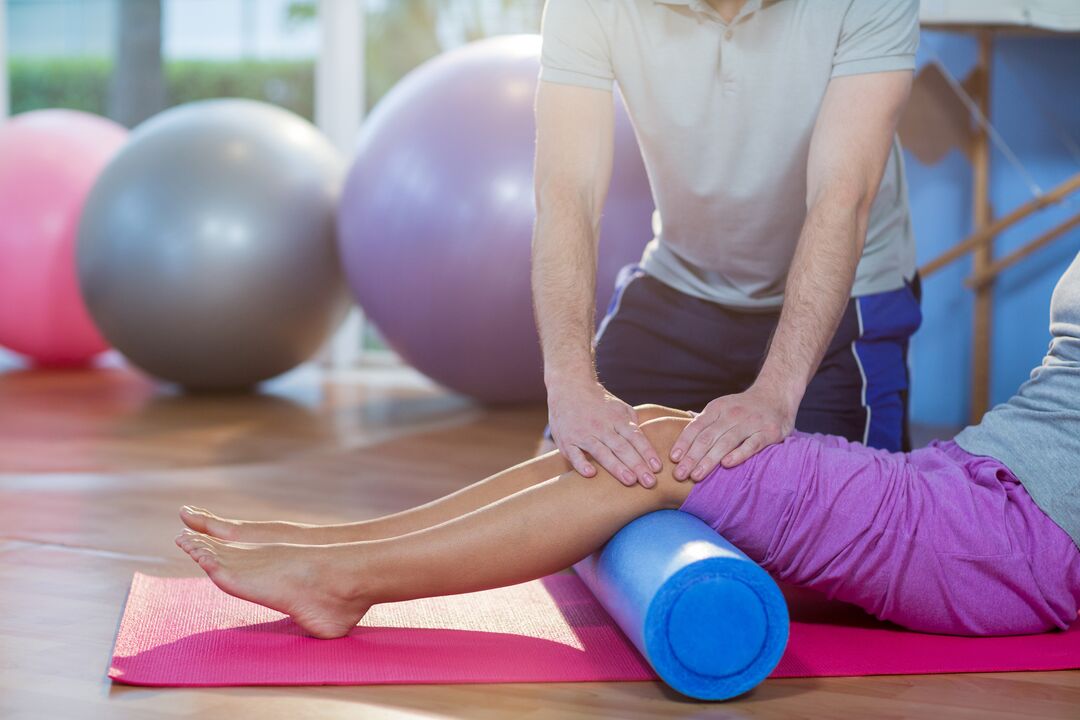
Exercise therapy is very useful and gives good results only when prescribed by a doctor and supervised with the advice of an expert or trainer.Self-medication is harmful to your health.Exercise therapy is used to further prevent the destruction of cartilage tissue, slow the development of stiffness, and relax muscle spasms that cause pain.Exercise therapy is contraindicated during exacerbations of the condition.A special personal course of exercises, taking into account not only the stage of the disease and the condition of the cartilage, but also the age of the patient, should be formulated by a specialist in the field.
physical therapy
Physiotherapy is used as one of the methods of conservative treatment - electrophoresis, laser therapy, acupuncture, dynamic current, ultra-high frequency.Local massage sessions can also produce positive results.Physical therapy methods work in multiple directions - relieving pain, reducing inflammation, normalizing metabolism within the joint and restoring its normal function.The method and duration of physical therapy depend on the patient's medical history and can only be prescribed after a thorough diagnosis and study of the joint condition.
Physical therapies to relieve pain include:
- Mid-wave ultraviolet irradiation (SUV irradiation).Contact of UV rays with the knee skin continues until slight redness occurs.Substances formed in the tissue reduce the sensitivity of nerve fibers, thereby achieving an analgesic effect.The duration of the treatment course is prescribed by the doctor based on symptoms, frequency and severity of pain.On average, treatment sessions last about 7-8 times.
- Local magnetic therapy is designed to bring about a complete recovery of the patient's body.The procedure can relieve inflammation, eliminate pain, and neutralize muscle spasms.Effective for early stage arthrosis of the knee joint.The course of treatment is usually limited to 20-25 operations, each lasting about half an hour.
- Infrared laser therapy, low-intensity UHF therapy, centimeter therapy (SMV therapy).
- Ultrasound, darsonvalization, therapeutic baths, interference therapy, used to improve blood circulation in the joints.
Resort sanitation is of great importance.This treatment is indicated for deformative and dystrophic osteoarthritis.Like the previously listed treatments, this one also has its contraindications, so the attending physician will carefully review the patient's medical history before recommending hygienic therapies.
Surgical treatment of knee arthritis
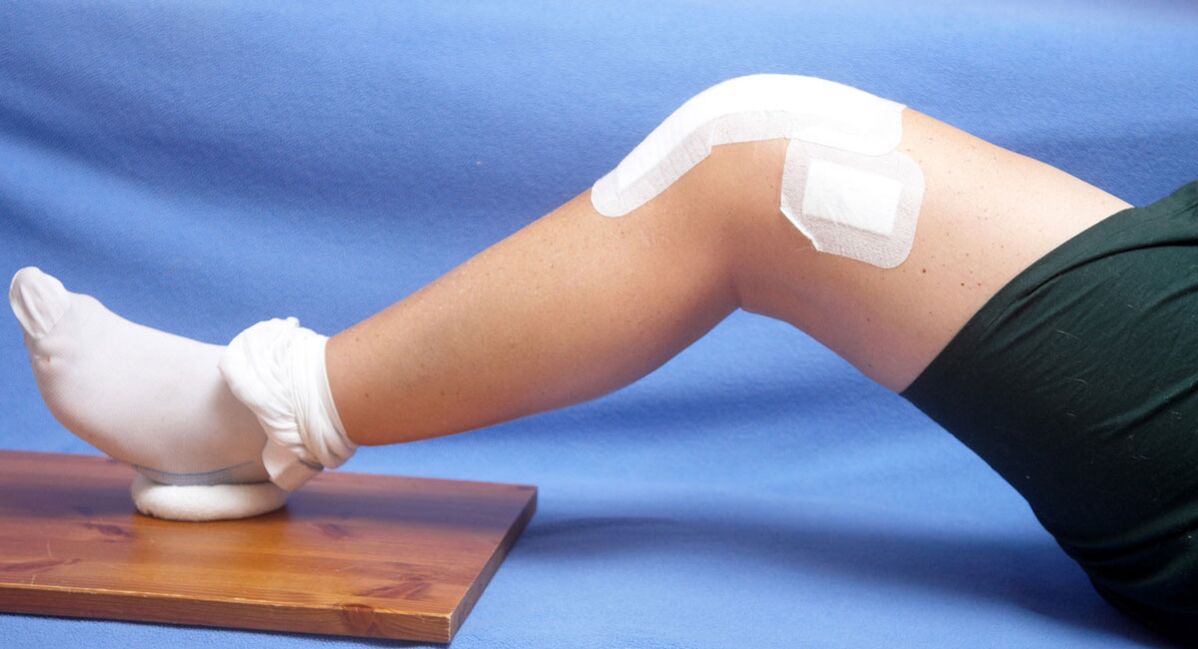
This is the fundamental method of treating arthrosis of the knee and can partially or completely restore the function of the joint.The method and form of surgical intervention depends on the extent of the joint damage and the patient's medical history.
Advanced knee arthritis can only be treated with surgery - complete or partial replacement of the knee joint with an endoprosthesis.Surgical treatment not only improves health but also restores a patient's ability to work in the final stages of knee joint disease.Many consider the longer recovery period using exercise therapy, mechanical therapy, and other methods to be a significant disadvantage of surgery.
There are several types of surgical intervention in the knee joint:
Prevent knee arthritis
To avoid this disease, high-risk groups (athletes, seniors, overweight people, corporate workers) must follow certain instructions:
- Proper nutrition and fighting overweight.It is necessary to exclude unhealthy foods from your diet - fatty foods, fried foods, alcohol, it is better to consult a nutritionist who will individually help you choose a suitable diet.
- When performing exercise, monitor the load on your joints and reduce the load if necessary.
- Monitor your health and treat infectious diseases promptly before they become chronic.
- If you have spinal disease, treat it promptly and adequately and develop correct posture.
- Sports activities (cycling, swimming, walking, special gymnastics exercises for joints).
- No self-medication allowed!Visit a clinic at the first symptoms of knee arthritis.
- Avoid stress and get a good night's sleep.
- Systematically improve your immunity (boost your own immunity or take a course of vitamins at least 2-3 times a year).
- Avoid hypothermia of the body, especially the lower limbs.
A healthy lifestyle and timely treatment are the best ways to prevent knee arthritis.